Module 4 · Lesson 2 of 2
Designing a Pipeline That Matches a Real Sales Process Pagdisenyo ng Pipeline na Tugma sa Totoong Sales Process
Awaiting hands-on verification. The concepts here are sound, but the click-by-click steps have not yet been re-walked in a live GoHighLevel sub-account. GoHighLevel changes often, so a menu name or screen may differ from what you see. Flagged rather than presented as verified.
Before this: Contacts vs Opportunities
Your knowledge-check score on Contacts vs Opportunities was under 60%. Worth a quick re-read before this one — it builds on it.
On this page

In this lesson
Designing a Pipeline That Matches a Real Sales Process
Sa lesson na ’to
Pagdisenyo ng Pipeline na Tugma sa Totoong Sales Process

Read the transcript
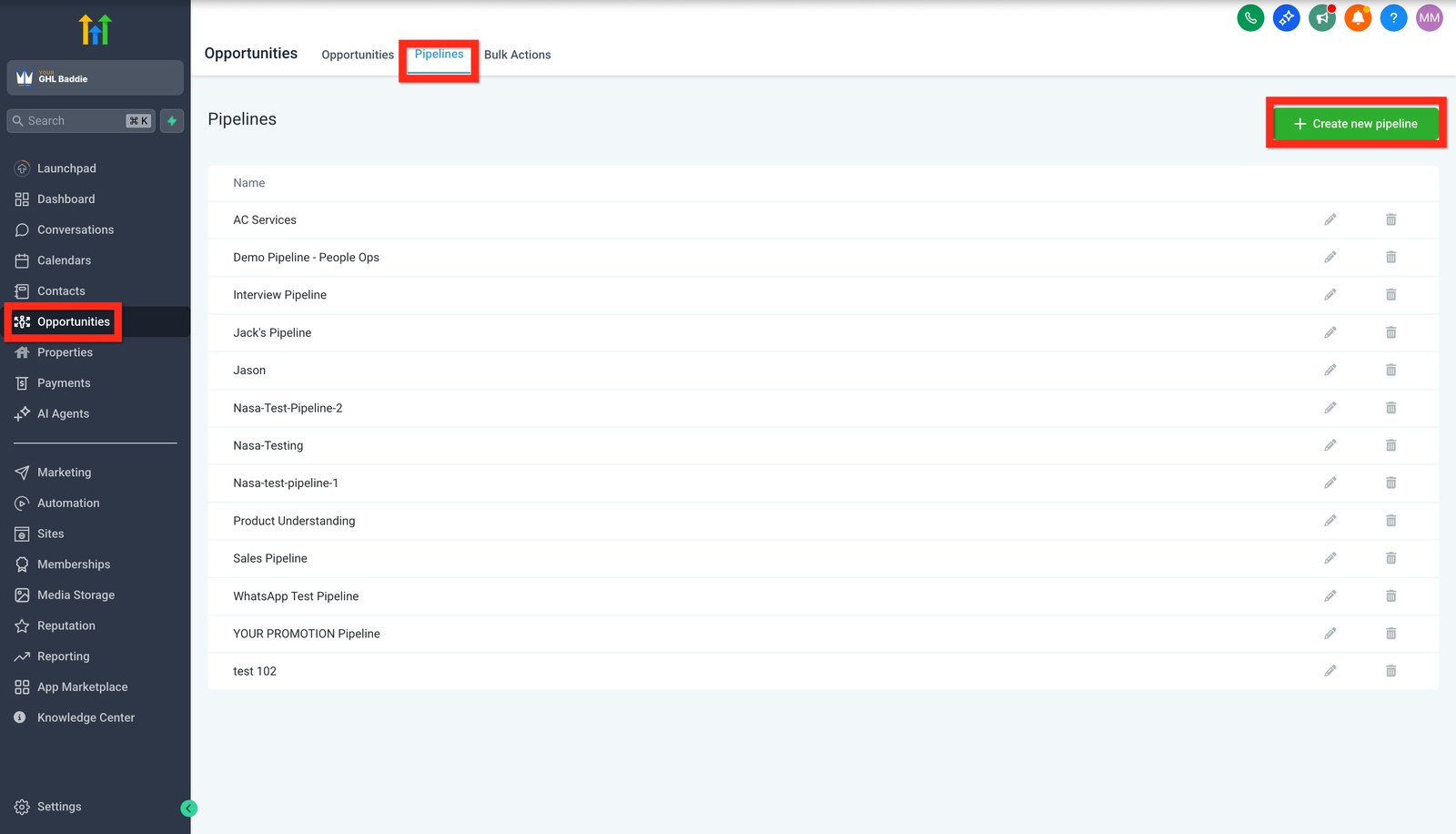
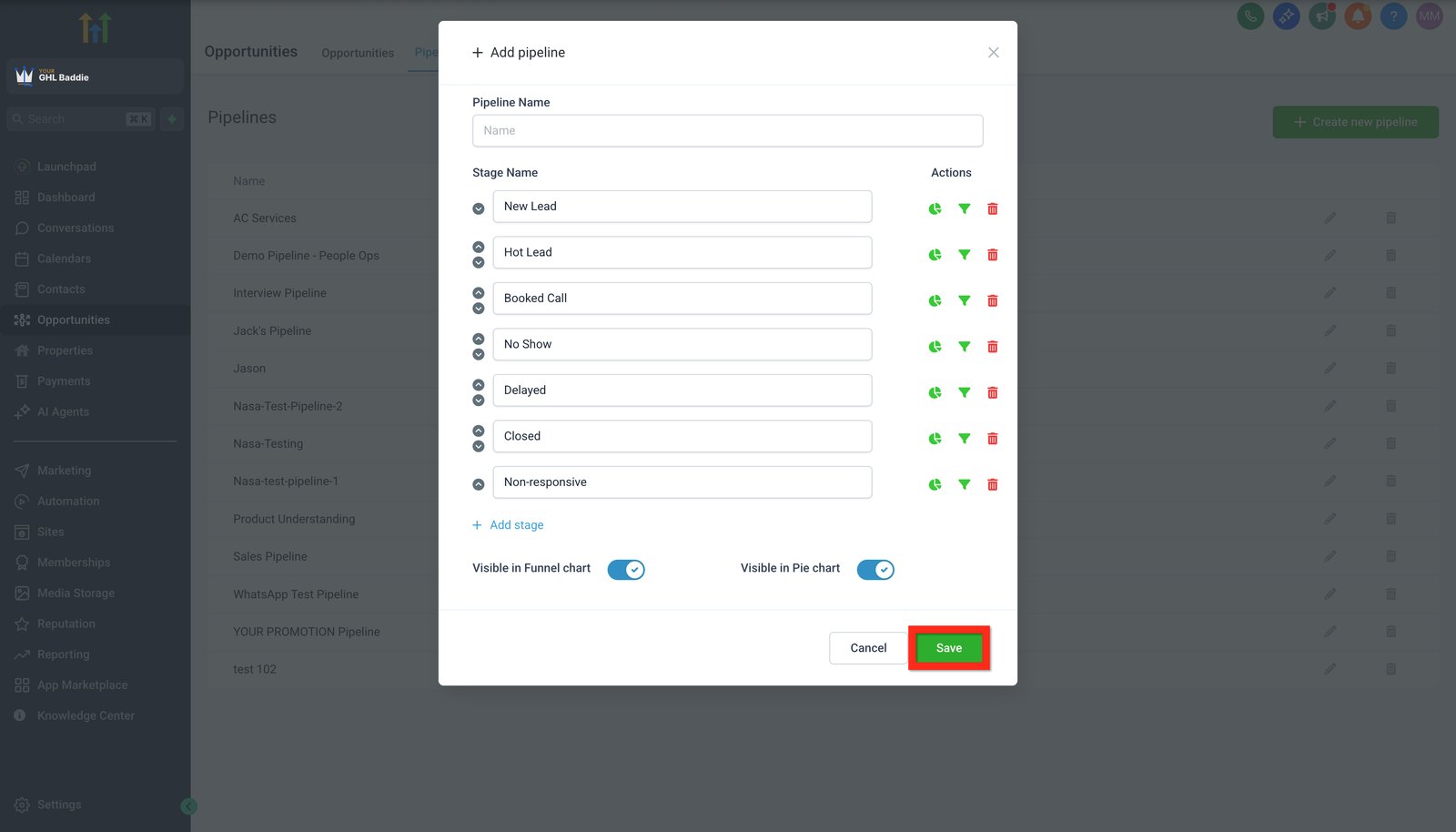
Hi baddie! I'm Hazel. Let's turn how a business really sells into pipeline stages. Go to Opportunities, then the Pipelines tab. Click Create new pipeline. Name the pipeline, then add the stages in order. Each stage should be something the business did, so nobody has to guess where a deal goes. Four to seven stages is usually right. Then click Save. Listen for the verbs in the client's message. Each verb is a stage. Read the lesson below, then try the practice.
Hi baddie! Si Hazel 'to. Gawin nating pipeline stages ang totoong paraan ng pagbebenta ng business. Go to Opportunities, then sa Pipelines tab. I-click ang Create new pipeline. Pangalanan ang pipeline, tapos i-add ang stages in order. Bawat stage ay dapat bagay na ginawa ng business, para walang manghuhula kung saan ang deal. Usually, apat hanggang pito ang tamang dami ng stages. Then click Save. Pakinggan ang verbs sa message ng client. Bawat verb, isang stage. Basahin ang lesson sa baba, tapos subukan ang practice.
What you'll learn
- Turn a client's description of how they sell into pipeline stages
- Write stages as actions the business takes, not feelings
- Avoid too many or too few stages
- Build your practice pipeline with the four stages your workflows will use
- Gawing pipeline stages ang paglalarawan ng client kung paano sila nagbebenta
- Isulat ang stages bilang actions ng business, hindi feelings
- Iwasan ang sobrang dami o sobrang kaunting stages
- Gawin ang practice pipeline mo na may apat na stages na gagamitin ng workflows mo
New words in this lesson
- Pipeline
- The set of stages a deal moves through, shown as a board. Good stages describe actions the business has taken.
What a client actually asks
"Can you set up our pipeline? We get inquiries, we go out and measure, we send a quote, and then we chase them until they say yes or no."
Ang tanong ng client
"Pwede mo bang i-set up ang pipeline namin? Nakakatanggap kami ng inquiries, pumupunta kami para mag-sukat, nagpapadala ng quote, tapos hinahabol namin sila hanggang mag-oo o mag-hindi."
Key concepts
“Set up our pipeline” is one of the most open-ended requests you’ll get. There’s no correct answer in general, only a correct answer for this business. Your job is to turn how they actually sell into a set of stages.
Stages are things the business does
The best rule in pipeline design: each stage should describe something the business has done, so anyone can tell where a deal belongs without guessing.
| Feeling-based (avoid) | Action-based (use) |
|---|---|
| Interested | Inquiry received |
| Warm | Site visit booked |
| Hot | Quote sent |
| Almost there | Follow-up in progress |
“Is this deal warm?” starts an argument. “Have we sent the quote?” has a yes or no answer.
Listen for the verbs
Go back to the client’s message: “We get inquiries, we go out and measure, we send a quote, and then we chase them until they say yes or no.”
Every verb is a stage:
- New inquiry — we get inquiries
- Site visit booked — we go out and measure
- Quote sent — we send a quote
- Following up — we chase them
And “until they say yes or no” isn’t a stage at all. That’s the status: won or lost.
How many stages?
Usually four to seven. Fewer and the board doesn’t tell the client anything. More and deals skip stages, which means the stages aren’t real steps. If you find yourself adding a stage “just in case”, leave it out.
Step-by-step build
Your practice pipeline uses four stages. Each one has a clear event that puts a deal there, and in Modules 5 and 6 a workflow moves the deal for you:
| Stage | The event that puts a deal here |
|---|---|
| New Lead | They submitted your form |
| Hot Lead | They replied to your nurture email |
| Booked Call | They booked on your calendar |
| No-show Nurture | Their appointment was marked as a no-show |
“Hot Lead” sounds like a feeling, which this lesson warns against. It works here because everyone agrees on the event behind it: the lead replied. A stage name is safe when nobody has to guess what it means.
Create a new pipeline and name it
Maria-Practice pipeline-024.Set the stages in order: New Lead → Hot Lead → Booked Call → No-show Nurture. GHL starts you with four example stages (New Lead, Contacted, Proposal Sent, Closed), so keep New Lead and rename the other three. Spell them exactly like this: your workflows pick stages by name.
- Save, then open the pipeline’s board view.
Create a test opportunity on your test contact (
Maria-Practice contact-024) in New Lead, with a value.Move it through every stage, then delete it. From Module 5, your workflows create and move opportunities automatically.
Check what you built
Ask the question a client would ask: “How many leads replied but haven’t booked yet?” If the Hot Lead column answers that at a glance, the pipeline works. Check the stage names are spelled exactly as above, because your workflows will pick them by name.
Mga pangunahing konsepto
Ang “i-set up ang pipeline namin” ay isa sa pinaka-open-ended na request na matatanggap mo. Walang iisang tamang sagot sa pangkalahatan, tamang sagot lang para sa business na ito. Trabaho mong gawing set ng stages ang paraan nila ng pagbebenta.
Ang stages ay mga ginagawa ng business
Ang pinakamagandang rule sa pipeline design: dapat naglalarawan ang bawat stage ng nagawa na ng business, para malaman ng kahit sino kung saan nabibilang ang deal nang hindi nanghuhula.
| Batay sa feeling (iwasan) | Batay sa action (gamitin) |
|---|---|
| Interested | Inquiry received |
| Warm | Site visit booked |
| Hot | Quote sent |
| Almost there | Follow-up in progress |
Pagtatalunan ang “Warm na ba ang deal na ‘to?”. Ang “Naipadala na ba natin ang quote?” ay may sagot na oo o hindi.
Pakinggan ang mga pandiwa
Balikan ang message ng client: “Nakakatanggap kami ng inquiries, pumupunta kami para mag-sukat, nagpapadala ng quote, tapos hinahabol namin sila hanggang mag-oo o mag-hindi.”
Bawat pandiwa ay isang stage:
- New inquiry — nakakatanggap kami ng inquiries
- Site visit booked — pumupunta kami para mag-sukat
- Quote sent — nagpapadala kami ng quote
- Following up — hinahabol namin sila
At ang “hanggang mag-oo o mag-hindi” ay hindi stage. ‘Yan ang status: won o lost.
Ilang stages?
Kadalasan apat hanggang pito. Kapag mas kaunti, walang masasabi ang board sa client. Kapag mas marami, nilalaktawan ng deals ang stages, ibig sabihin hindi totoong steps ang stages. Kung nagdadagdag ka ng stage “just in case”, huwag na.
Pag-build, step by step
Apat na stages ang practice pipeline mo. Bawat isa ay may malinaw na event na naglalagay ng deal doon, at sa Modules 5 at 6, workflow ang maglilipat ng deal para sa’yo:
| Stage | Ang event na naglalagay ng deal dito |
|---|---|
| New Lead | Nag-submit sila ng form mo |
| Hot Lead | Nag-reply sila sa nurture email mo |
| Booked Call | Nag-book sila sa calendar mo |
| No-show Nurture | Na-mark na no-show ang appointment nila |
Parang feeling ang “Hot Lead”, na binabalaan ng lesson na ‘to. Pero gumagana ito dito dahil pare-pareho ang pagkakaintindi ng lahat sa event sa likod nito: nag-reply ang lead. Ligtas ang pangalan ng stage kapag walang kailangang manghula kung ano ang ibig sabihin nito.
Gumawa ng bagong pipeline at pangalanan itong
Maria-Practice pipeline-024.I-set ang stages nang sunod-sunod: New Lead → Hot Lead → Booked Call → No-show Nurture. May apat na halimbawang stage na agad ang GHL (New Lead, Contacted, Proposal Sent, Closed), kaya iwan ang New Lead at palitan ang pangalan ng tatlo pa. Ganito mismo ang spelling: pinipili ng workflows mo ang stage ayon sa pangalan.
- I-save, tapos buksan ang board view ng pipeline.
Gumawa ng test opportunity sa test contact mo (
Maria-Practice contact-024) sa New Lead, na may value.Ilipat ito sa bawat stage, tapos i-delete. Simula Module 5, ang mga workflow mo na ang gagawa at maglilipat ng opportunities.
I-check ang ginawa mo
Itanong ang itatanong ng client: “Ilan ang nag-reply pero hindi pa nagbo-book?” Kung nasasagot ito ng Hot Lead column sa isang tingin, gumagana ang pipeline. I-check na eksakto ang spelling ng stage names gaya sa itaas, dahil pipiliin ito ng workflows mo ayon sa pangalan.
Common mistakes
- Stages na naglalarawan ng feelings ("Interested", "Hot", "Warm")
- Hindi magkakasundo ang dalawang tao sa ibig sabihin ng "warm". Ipangalan ang bawat stage sa nagawa na ng business — "Site visit booked", "Quote sent".
- Labinlimang stages
- Kung nilalaktawan ng deals ang kalahati ng stages, sobra ang dami. Apat hanggang pito ang kailangan ng karamihan ng maliliit na business.
- Ginagamit ang stages para sa won at lost
- Statuses ang won at lost, hindi stages. Para sa steps ng proseso ang stages; i-set ang status kapag alam na ang resulta.
- Nagdidisenyo ng pipeline nang hindi tinatanong kung paano talaga sila nagbebenta
- Hindi mahalaga ang ideya mo ng "magandang" pipeline. Ipakwento sa client ang nangyayari mula inquiry hanggang bayad, tapos 'yon ang i-build.
- Stages that describe feelings ("Interested", "Hot", "Warm")
- Two people will disagree about what "warm" means. Name each stage after something the business has done — "Site visit booked", "Quote sent".
- Fifteen stages
- If deals skip half the stages, there are too many. Most small businesses need four to seven.
- Using stages for won and lost
- Won and lost are statuses, not stages. Keep stages for the steps of the process; set the status when the outcome is known.
- Designing the pipeline without asking how they actually sell
- Your idea of a "good" pipeline doesn't matter. Ask the client to walk you through what happens from inquiry to payment, then build that.
Practice
🔒 Practice opens once you've completed every lesson in Learn.
Want to follow along in a real account? You need GHL access — get a free 30-day trial + free live training (affiliate link). Gusto mo bang sumabay sa totoong account? Kailangan mo ng GHL access — kumuha ng libreng 30-day trial + libreng live training (affiliate link).
Knowledge check
5 quick questions. You'll see why each answer is right or wrong as you go, and you can retake it as often as you like.