Module 4 · Lesson 1 of 2
Contacts vs Opportunities Contacts vs. Opportunities
Awaiting hands-on verification. The concepts here are sound, but the click-by-click steps have not yet been re-walked in a live GoHighLevel sub-account. GoHighLevel changes often, so a menu name or screen may differ from what you see. Flagged rather than presented as verified.
Before this: The Contact Record: GHL's Center of Gravity
Your knowledge-check score on Build a Two-Page Lead Capture Funnel was under 60%. Worth a quick re-read before this one — it builds on it.
On this page

In this lesson
Contacts vs Opportunities
Sa lesson na ’to
Contacts vs. Opportunities

Read the transcript
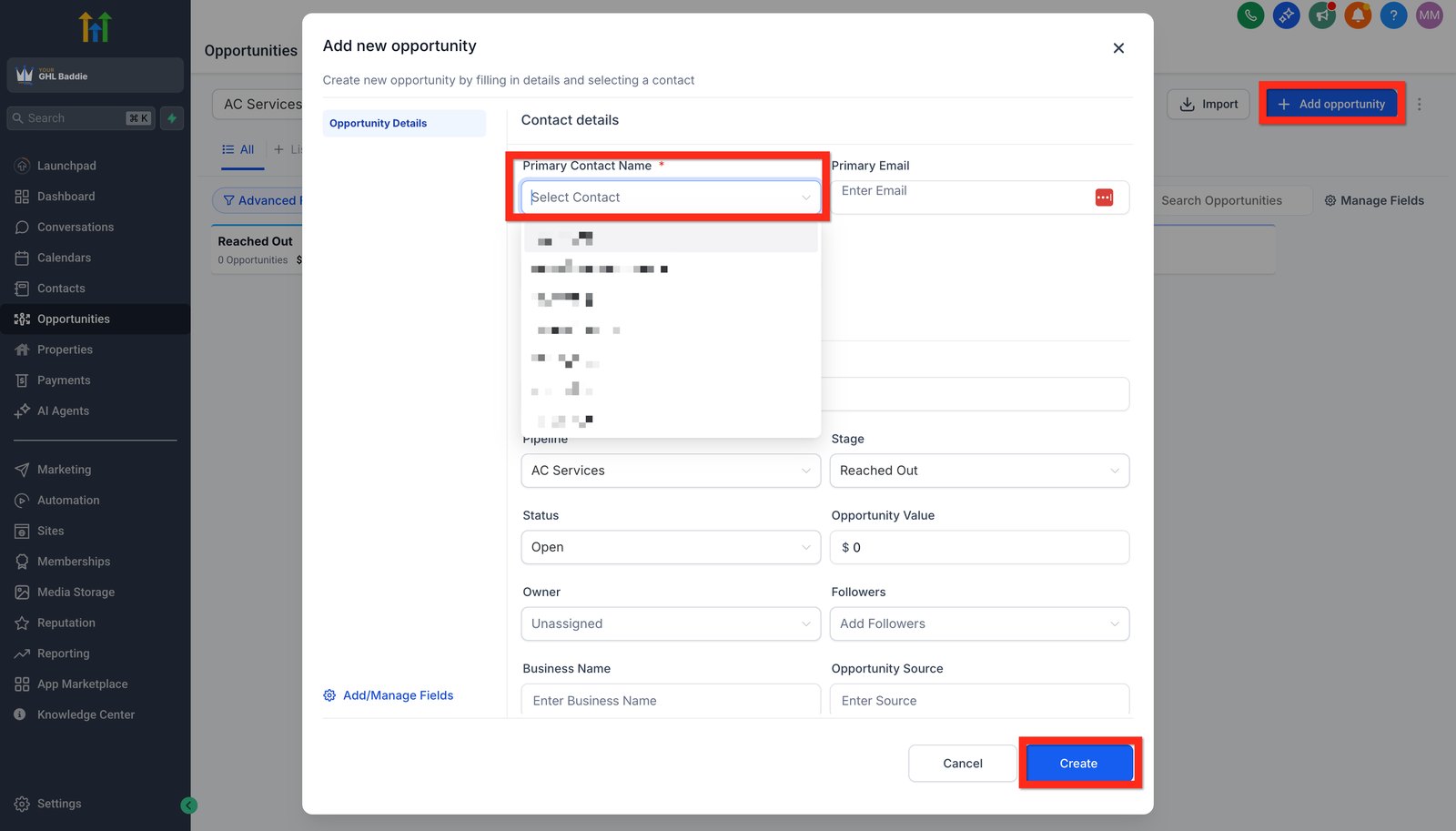
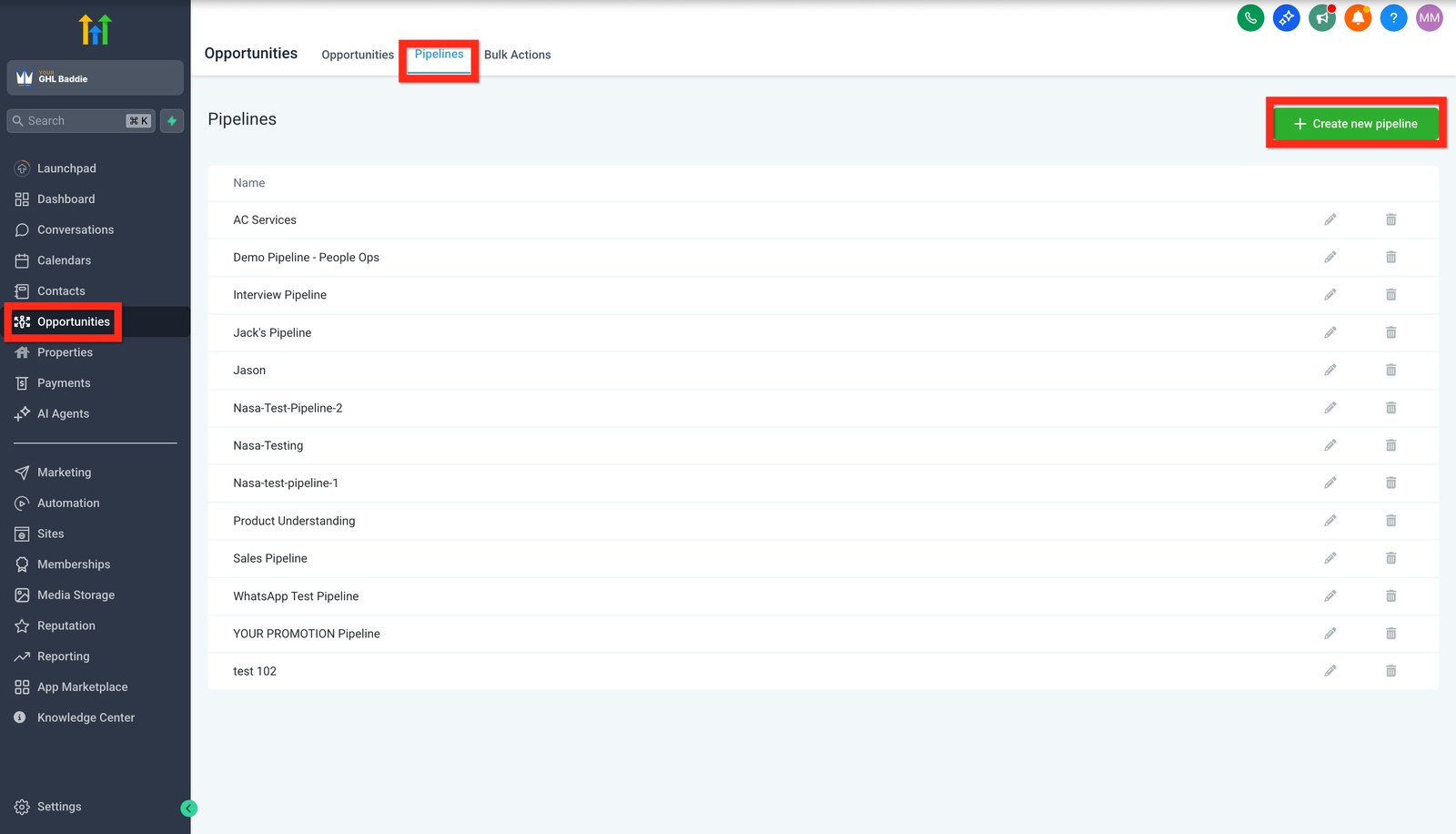
Hi baddie! I'm Hazel. A contact is a person. An opportunity is a deal. Let me show you. Adding an opportunity starts with picking the contact it belongs to. Then choose the pipeline, stage, status and value. One person can have many deals. Deals live in pipelines. Find them under Opportunities, then Pipelines. A pipeline shows every deal and its stage. Tags can't do that. New lead asking for a quote? That's a new contact and a new opportunity. Read the lesson below, then take the quick check.
Hi baddie! Si Hazel 'to. Ang contact ay tao. Ang opportunity ay deal. Ipapakita ko. Pag nag-add ng opportunity, uunahin mong piliin ang contact na may-ari nito. Tapos piliin ang pipeline, stage, status at value. Pwedeng maraming deals ang isang tao. Nasa pipelines ang deals. Hanapin sa Opportunities, then Pipelines. Kita sa pipeline ang bawat deal at ang stage niya. Hindi 'yan kaya ng tags. Bagong lead na humihingi ng quote? Bagong contact at bagong opportunity 'yan. Basahin ang lesson sa baba, tapos sagutan ang quick check.
What you'll learn
- Explain the difference between a contact and an opportunity
- Know when to create an opportunity, and when not to
- Understand that one contact can have several opportunities
- Read an opportunity's stage, value and status
- Ipaliwanag ang pagkakaiba ng contact at opportunity
- Malaman kung kailan gagawa ng opportunity, at kailan hindi
- Maintindihan na pwedeng magkaroon ng ilang opportunities ang isang contact
- Mabasa ang stage, value at status ng opportunity
New words in this lesson
- Opportunity
- A potential sale with a contact, tracked on a pipeline with a stage, value and status. A contact is a person; an opportunity is a deal.
What a client actually asks
"Mrs Reyes bought a kitchen renovation last year and now wants a quote for her bathroom. Do I make her a new contact?"
Ang tanong ng client
"Nagpa-kitchen renovation si Mrs. Reyes last year at ngayon gusto niya ng quote para sa banyo niya. Gagawan ko ba siya ng bagong contact?"
Key concepts
This is the single most common beginner confusion in GoHighLevel, so here it is in one line:
A contact is a person. An opportunity is a deal.
The contact record (Lesson 4) holds who someone is and everything that’s happened with them. An opportunity represents one potential sale with that person: what it’s for, how much it’s worth, and how far along it is.
Why they’re separate
Because one person can have several deals over time, and you want to track each one on its own. The client at the top of the page has exactly that:
- Contact: Mrs Reyes — one record, with all her history
- Opportunity 1: Kitchen renovation — Won, last year
- Opportunity 2: Bathroom renovation — Quote requested, this week
If you made her a second contact, her history would be split in two, and the business would lose the most valuable fact they have: she’s a happy repeat customer.
What an opportunity holds
| Part | What it means |
|---|---|
| Pipeline | Which sales process this deal belongs to |
| Stage | Where it is in that process right now |
| Value | What it’s worth, if known |
| Status | Open, won, lost, or abandoned |
| Owner | Which team member is responsible |
| Contact | The person it belongs to |
Stages move as the deal progresses. Status tells you whether it’s still alive. Together they give the client a board view of every deal in play, which is what “set up our pipeline” really means.
Tags vs stages
Beginners often track progress with tags: quote-sent, negotiating, won.
It works until the client asks “how many deals are stuck at quote stage, and
what are they worth?” Tags can’t answer that. A pipeline can, at a glance.
Try it: map a real situation
No build yet — that’s the next lesson. For now, practice the thinking. For each situation, decide: new contact, new opportunity, both, or neither?
- A brand-new lead asks for a quote. → Both: a new contact and an opportunity.
- An existing customer asks for a second, separate job. → New opportunity on the existing contact.
- Someone signs up for the newsletter. → Contact only. No deal yet.
- A lead who went quiet replies asking about the same quote. → Neither. Update the existing opportunity’s stage.
If you can answer those four without thinking, you understand the most important concept in this module.
Mga pangunahing konsepto
Ito ang pinakakaraniwang kalituhan ng beginners sa GoHighLevel, kaya heto sa iisang linya:
Tao ang contact. Deal ang opportunity.
Hawak ng contact record (Lesson 4) kung sino ang isang tao at lahat ng nangyari sa kanila. Ang opportunity ay kumakatawan sa isang potential sale sa taong ‘yon: para saan, magkano ang halaga, at gaano na kalayo.
Bakit sila magkahiwalay
Dahil pwedeng magkaroon ng ilang deals ang isang tao sa paglipas ng panahon, at gusto mong i-track ang bawat isa nang hiwalay. Ganyan mismo ang client sa itaas:
- Contact: Mrs. Reyes — isang record, nandoon lahat ng history niya
- Opportunity 1: Kitchen renovation — Won, last year
- Opportunity 2: Bathroom renovation — Quote requested, ngayong linggo
Kung gagawan mo siya ng pangalawang contact, mahahati sa dalawa ang history niya, at mawawala sa business ang pinakamahalagang fact na hawak nila: masaya siyang balik-customer.
Ano ang laman ng opportunity
| Parte | Ibig sabihin |
|---|---|
| Pipeline | Saang sales process kabilang ang deal na ‘to |
| Stage | Nasaan na ito sa prosesong ‘yon ngayon |
| Value | Magkano ang halaga, kung alam |
| Status | Open, won, lost, o abandoned |
| Owner | Sinong team member ang responsable |
| Contact | Ang taong may-ari nito |
Gumagalaw ang stages habang umuusad ang deal. Sinasabi ng status kung buhay pa ito. Magkasama, binibigyan nila ang client ng board view ng bawat deal na umaandar — ‘yan ang totoong ibig sabihin ng “i-set up ang pipeline namin”.
Tags o stages?
Madalas, tags ang gamit ng beginners para i-track ang progress: quote-sent,
negotiating, won. Gumagana ‘yan hanggang magtanong ang client ng “ilang deals
ang stuck sa quote stage, at magkano ang halaga nila?” Hindi ‘yan masasagot ng
tags. Kaya ‘yan ng pipeline, sa isang tingin lang.
Subukan: i-map ang totoong sitwasyon
Wala pang build — sa susunod na lesson ‘yan. Sa ngayon, praktisin ang pag-iisip. Para sa bawat sitwasyon, magdesisyon: bagong contact, bagong opportunity, pareho, o wala?
- Bagong-bagong lead ang humingi ng quote. → Pareho: bagong contact at opportunity.
- Existing customer ang humingi ng pangalawa at hiwalay na trabaho. → Bagong opportunity sa existing contact.
- May nag-sign up sa newsletter. → Contact lang. Wala pang deal.
- Lead na nanahimik ang sumagot, nagtatanong tungkol sa parehong quote. → Wala. I-update ang stage ng existing opportunity.
Kung masasagot mo ang apat na ‘yan nang hindi nag-iisip, naiintindihan mo na ang pinakamahalagang concept sa module na ‘to.
Common mistakes
- Gumagawa ng bagong contact para sa bagong deal ng balik-customer
- Parehong tao, parehong contact. Gumawa ng bagong opportunity sa existing contact, para magkakasama pa rin ang buong history niya.
- Gumagawa ng opportunity para sa bawat contact
- Hindi deal ang newsletter subscriber. Gumawa lang ng opportunities kapag may totoong potential sale na may magtatrabaho.
- Gumagamit ng tags para i-track ang progress ng deal
- Ang "quote-sent", "negotiating", "won" bilang tags ay hindi makakapagpakita ng board, totals o kung gaano katagal nang stuck ang deals. 'Yan ang trabaho ng pipeline stages.
- Creating a new contact for a repeat customer's new deal
- Same person, same contact. Create a new opportunity on the existing contact, so their full history stays together.
- Creating an opportunity for every contact
- A newsletter subscriber isn't a deal. Create opportunities only when there's a real potential sale someone will work on.
- Using tags to track deal progress
- "quote-sent", "negotiating", "won" as tags can't show you a board, totals or how long deals are stuck. That's what pipeline stages are for.
Knowledge check
5 quick questions. You'll see why each answer is right or wrong as you go, and you can retake it as often as you like.